
From a passion for illustrated art to artisanal prints on fabrics using eco-sustainable materials.Elena Campa's craftsmanship is a blend of travel, love for the environment, and experimentation. She is an artist driven by a constant desire for research, which involves the use of recycled materials, destinations that arise from her travels, and a great love for nature. After the pandemic, she made a one-way trip from Milan to Lecce, where she now lives and finds new inspiration for her fabrics through encounters, suggestions, and a daily life made up of more conscious choices.
Where did your passion for artisan printing come from?
It all started while I was studying illustration in Rome. Together with four other friends, I bought a calcographic press and rented a kind of garage in San Lorenzo where we started a wonderful artisan printing project on paper and fabric, Studio Arturo. We began producing handmade posters and booklets and buying used clothing to print illustrations engraved on linoleum onto. Each garment was a unique piece.

credits: Francesco Buccarelli
Handcrafted prints with eco-sustainable materials: what are the materials you use most and prefer in your work?
I often use recycled materials and try to buy as little as possible, making matrices with various types of rubber. I also often use risograph printing, which uses soy-based inks and has a low environmental impact. Unfortunately, there are not many eco-friendly materials available for printing, and inks are often not very sustainable.
Lately, I have also been experimenting a lot with natural dyes, and I have a project in the works that I can't talk about yet, but I hope to be able to move forward with it in the coming months.
Your prints are handcrafted on fabric and paper. What are the main differences in working with these two materials?
Unlike what I did at the beginning, both the technique and the inks I use are different depending on the medium. For paper, for example, I use a press and a risograph, almost never blocks or stamps, which I use almost exclusively for printing on fabric.

credits: Francesco Buccarelli
Living in an eco-sustainable way means embracing a different perspective by making conscious choices every day. When and how did you approach this theme in your work? And in your training?
I have always been quite sensitive to this issue, which unfortunately is now widely abused. For about ten years, I have been trying to reducethe environmental impact of my work (in printing, the environmental impact can be very high), so I started to reduce the materials I buy and use recycled materials, and began researching natural inks and non-toxic engraving.
When I lived in Milan, I paid attention to the little things: I used my bicycle, I paid attention to food packaging and supply chain traceability, but the big city also brings with it big compromises. Since the beginning of the pandemic, I have moved to Lecce, almost in the countryside, and this has helped me to make more conscious choices in my private life as well. I am convinced that the very first choice concerns food. Carefully deciding what we buy and eat changes the way of life of a very large chain of actors involved in food production.
I no longer buy fruit, vegetables, and cheese from large retailers (or even from the market), but only through small producer purchasing groups, in addition to my own vegetable garden and three chickens (and five chicks!) for self-production of food. I only (or almost only) eat meat that I know where it comes from and that comes from very small farmers. Unfortunately, I still eat a little fish, but I swear it's very little! I don't buy fast fashion, even though the temptation is always there. In fact, I try to buy only second-hand clothes or clothes from sustainable supply chains. Unfortunately, greenwashing is everywhere these days, so you have to keep your eyes open. My choice is not radical, but I am committed to being consistent.
What advice would you give to someone who dreams of making their art their profession?
Art and profession are words that are truly full of meaning and contradictions. These are increasingly difficult times, and I don't know if I'm the right person to give good advice. In any case, it's important to believe in yourself and engage with the world to understand what you're really good at.
What does research and experimentation mean to you?
I really like experimenting, partly because I get bored repeating things I've already done in the same way, so I look for variations.
I often use workshops and laboratories with adults and children as an excuse to try new things. The participants themselves give me lots of inspiration and suggestions, and the encounter always gives rise to ideas that I take with me and explore further over time.

credits: Francesco Buccarelli
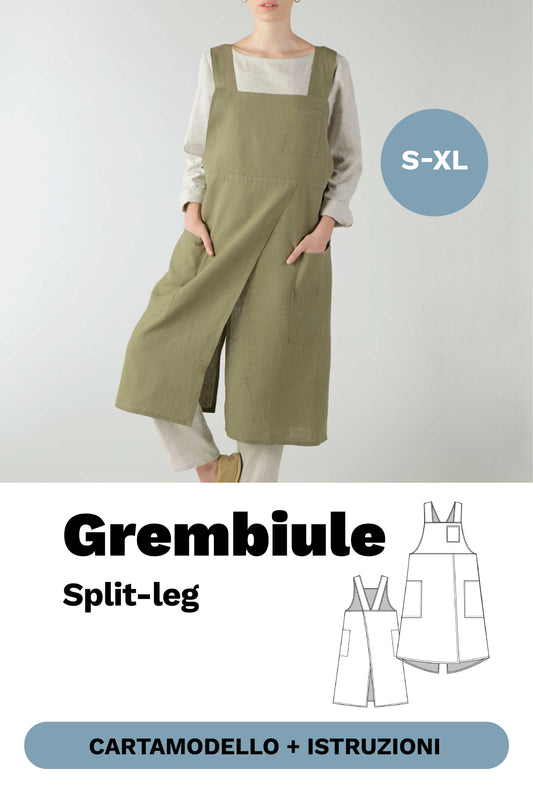
Elena was inspired to customize the split-leg aprons in hemp and linen by Mexican iconography and southern Italy, a land to which Elena never returned after her trip. The prints handcrafted with eco-sustainable materials, have been created on Split Leg, an apron designed for artisans who work on a lathe and need to have their legs covered: the 100% Italian fabric makes it a comfortable and lightweight garment, yet extremely durable.
Find out more in our shop!